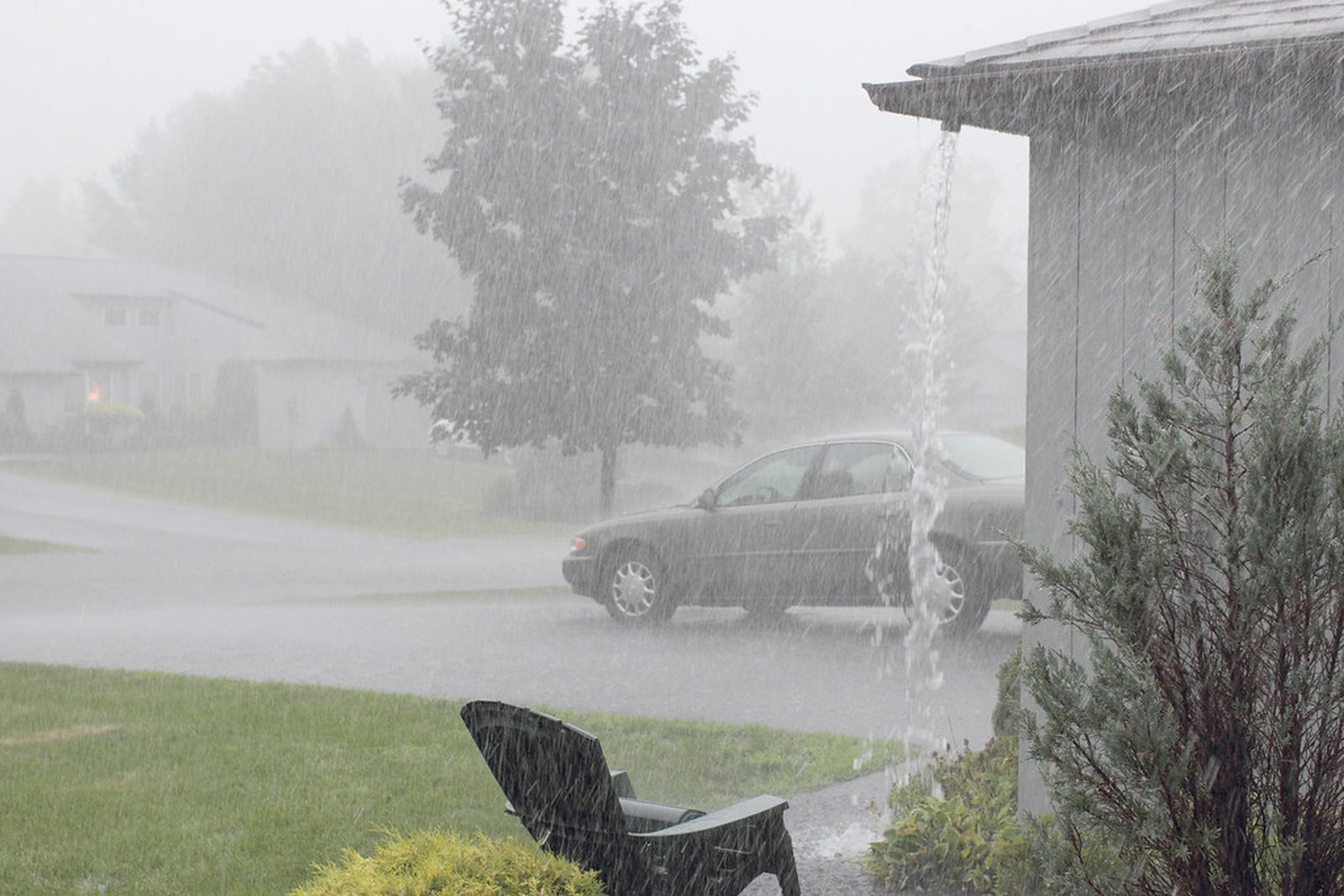
The short answer: a buried downspout extension is a solid pipe that carries roof water underground from each downspout to a pop-up emitter or outlet away from the house. If your water problem is mostly at downspout corners, this may be all you need.
When buried downspouts are enough
- Water pools at downspout corners or along the foundation right below them
- The basement gets damp after heavy rain, worst near a downspout
- Mulch beds near the house stay soggy for days
It adds up fast: the USGS puts one inch of rain at roughly 600 gallons per 1,000 square feet of roof.
When you need more
If the yard stays soggy away from the house, if water flows toward you from a neighbor, or if the low spot is in the middle of the lawn, downspout lines won’t solve it. That’s when a french drain or regrading enters the picture.
Details that matter
- Solid pipe, not perforated: the line should carry water away, not leak it along the route.
- Continuous slope: drainage guides call for the line to fall steadily - about 1% - so water never sits in the pipe. A flat or bellied line holds water, and standing water in a Michigan winter is a problem.
- Where it ends: a pop-up emitter in the yard or another approved discharge point. Dumping onto a neighbor’s property or a sidewalk is a problem, not a solution.
What it costs
Downspout lines are usually the least expensive drainage work, because the runs are short and shallow compared with a full drain system. The installer prices the actual job after seeing the yard. Our cost guide explains how drainage pricing works overall.