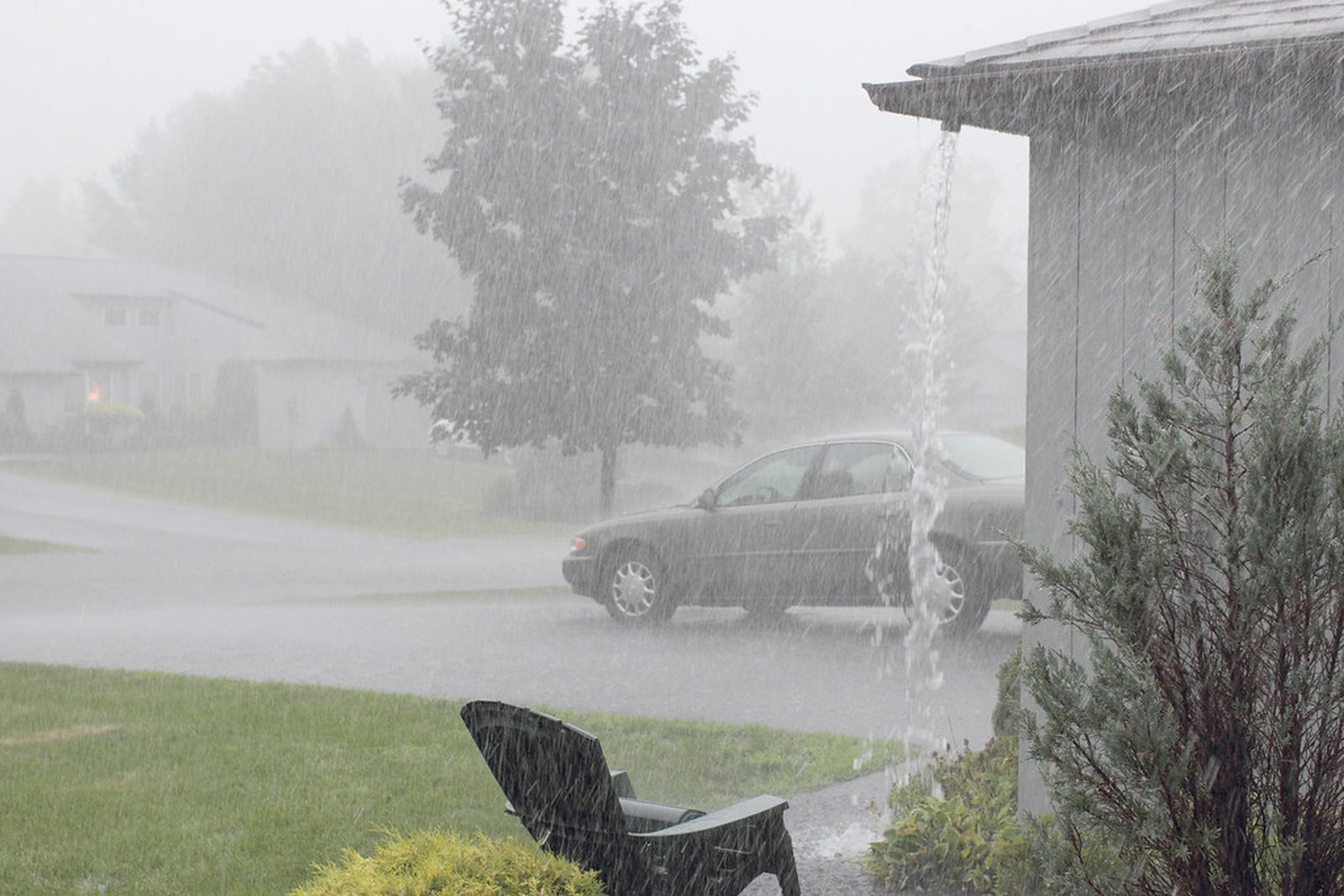
The short answer: a french drain is a sloped trench filled with gravel and a perforated pipe that collects water moving through the soil and carries it to a lower outlet. In the Detroit area, where Wayne State research describes the native soils as originally somewhat poorly drained glacial sediment, it is a standard tool for soggy yards and water pressing against foundations.
How a french drain is built
Published installation guides agree on the basics:
- The path is laid out first. The installer finds where the water comes from and where it can go - a lower spot on the property, a dry well, or another approved outlet. Water has to flow downhill the whole way.
- The trench is dug. Published guides call for roughly 18 to 24 inches deep for a yard drain (deeper near a foundation), with about a 1% slope - around a foot of fall per 100 feet of run.
- Fabric, stone and pipe go in. Standard practice in the guides is a trench lined with nonwoven filter fabric, washed stone, and 4-inch perforated pipe, so sediment can’t clog the system over time.
- The trench is closed. Stone to near the surface, then soil and seed or sod on top.
What installation day looks like
Expect a trench across part of the yard, machinery noise, and a lawn that needs a few weeks to grow back. How long the job takes depends on the length, depth, soil and weather - the crew sets the schedule after seeing the work. One thing isn’t optional: Michigan law requires utility lines to be marked through MISS DIG 811 before digging. The request is free and must be placed at least 3 business days before work starts. When a contractor does the digging, placing that request is the contractor’s job; if you dig your own drain, you place it yourself.
Exterior vs. interior systems
Exterior (yard) drains handle water before it reaches the house: soggy lawns, water against the foundation wall, wet spots that never dry.
Interior basement systems catch water that’s already coming through the foundation and route it to a sump pump. Cost guides treat these as different jobs with different pricing - Angi’s guide, for example, prices interior systems several times higher per foot than exterior drains. Which one fits is a question for whoever inspects the house.
What to ask before you hire anyone
- Where exactly will the water go? A drain with nowhere to outlet is a gravel trench that holds water.
- Is the trench lined with filter fabric, and is the stone washed? The published guides treat this as standard, so a quote should say.
- Who places the MISS DIG 811 request, and when?
- Is the company insured, and can they prove it?
- Does the work need a permit in your city, and who pulls it?
- What does the lawn look like when they leave, and is restoration included?